
Owens Corning Vapor Barrier Installation: The San Jose Owner’s Guide
Owens Corning vapor barrier installation in San Jose typically runs $1.90 to $3.40 per square foot for materials and labor, and we stock compatible vapor barrier rolls on our trucks for same-day or next-day service. A failing vapor barrier almost always shows up the same way: you pull down the crawl space access panel or peer into a knee wall and spot condensation beading on framing, or you notice that musty smell that won’t quit no matter how much you air the house out. Most San Jose homeowners discover the problem during a routine insulation check or after a leak exposed the barrier to standing water.
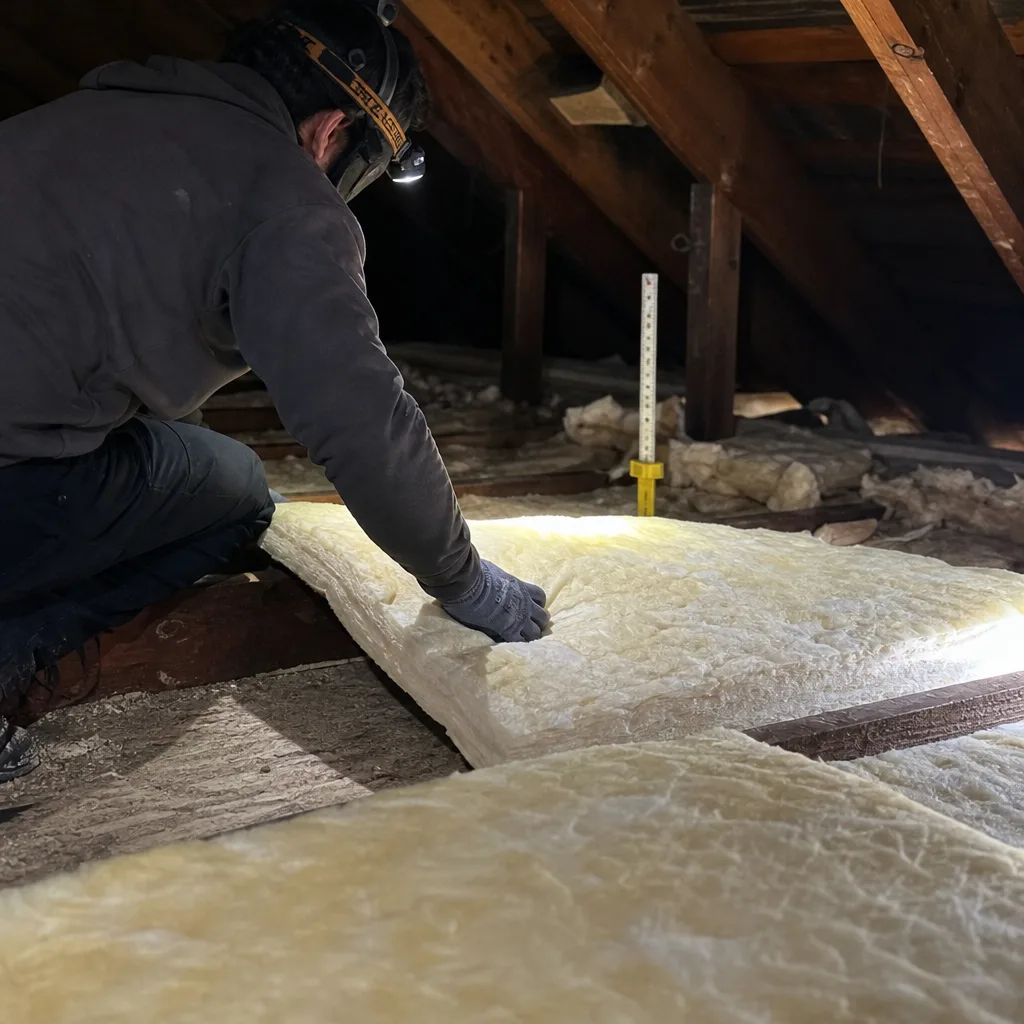
We’re Woolsey Insulation San Jose, an independent San Jose insulation contractor. We’re not affiliated with Owens Corning, but we work with their vapor barrier products every week and know exactly how they behave in Bay Area crawl spaces and attics. If you have an Owens Corning vapor barrier that’s torn, misinstalled, or simply worn out, this page tells you what it costs to fix, whether it’s worth repairing versus replacing, and how we handle the job from first call to final cleanup.
Which Owens Corning Models This Applies To
Owens Corning makes vapor barriers under a few product lines, and the one you have changes what we recommend. The most common in San Jose homes is the Owens Corning InsulDam and Foamular series, which come in rolls or rigid panels ranging from 4-mil to 10-mil thickness for film barriers and up to 2 inches for rigid foam board. Most residential crawl space and wall applications in San Jose use 6-mil reinforced poly film, while cathedral ceilings and below-grade walls lean toward Foamular rigid board with a foil or plastic facing.
The key compatibility gotcha: not every Owens Corning vapor barrier is rated for ground contact. If a previous contractor laid a wall-rated barrier directly on crawl space soil, it will fail early, usually within two to four years, because soil moisture and pH break down the film. We check the product label or measure the thickness and look for the ASTM E1745 rating. That rating matters more than the Owens Corning name on the box. When we quote a replacement, we tell you whether a genuine Owens Corning product makes sense or whether a quality aftermarket equivalent with the same ASTM rating performs equally well at a lower price. We carry both and we’re honest about which one fits your situation.
Signs Your Owens Corning Vapor Barrier Installation Is Failing
- Condensation on crawl space framing or subfloor. Moisture is passing through a torn or improperly lapped seam and hitting cooler wood. In San Jose’s mild winters, this shows up as damp spots on the underside of your floor joists, especially near perimeter walls.
- A persistent musty or earthy smell on the first floor. That odor is mold and mildew feeding on damp wood and dust. A failed vapor barrier lets ground moisture rise continuously, and the smell follows the air into your living space.
- Cupped or warped hardwood floors. Excess crawl space humidity moves upward and wood responds. If your floors are bowing slightly in one room, the vapor barrier under that section is often the first place we look.
- Visible tears, sagging, or gaps at seams. Walk your crawl space with a flashlight. If the barrier has pulled away from the foundation wall or the overlap seams have opened, moisture is getting through. Rats and mice in San Jose neighborhoods near creeks and open space also chew through poly film, leaving obvious holes.
- Higher indoor humidity readings. If your HVAC runs more in summer and the house still feels sticky, damaged vapor barrier is a likely contributor. San Jose’s dry summers mask this less than coastal cities, but a crawl space with standing moisture will still push humidity up.
Replacement Cost & What’s Included
For a typical San Jose crawl space between 1,000 and 1,500 square feet, Owens Corning-compatible vapor barrier installation runs $1,900 to $5,100. Smaller jobs under 800 square feet land between $1,500 and $2,700. The spread comes down to access height, how much old material needs removal, whether the crawl space has standing water, and the thickness of the barrier you choose. Labor is usually 60 to 70 percent of the total, and we spell that out line by line in the written quote.
Every replacement includes removing the old barrier, laying new 6-mil or 10-mil poly with 12-inch overlapped and taped seams, running the material up the foundation walls, sealing around piers, and hauling away everything we pulled out. We also check the insulation above for moisture damage while we’re in there. If the old barrier failed because of a drainage problem outside, we’ll tell you before we lay new material, because a new barrier over the same water source is a waste of your money. The price we give you is the price you pay, in writing, before work starts. And the job carries our 365-Day Done Right Promise: if anything isn’t right within a year, we come back and fix it at no charge.
DIY or Call Us?
You can absolutely check your vapor barrier yourself and tell us what you see. That’s useful. Crawl in with a flashlight, look for tears, note where seams have separated, and check whether the barrier runs up the foundation walls at least six inches. But replacing a vapor barrier in a San Jose crawl space is slow, awkward work done on your back or knees in a space that can be 18 inches high. It’s not dangerous the way live electrical work is, but it’s physically demanding and easy to get wrong, especially taping seams around plumbing and support piers where most failures happen.
If your crawl space is tight, wet, or has rodent damage, we’d say let our crew handle it. We do this every week, we bring the right tape, the right fasteners, and knee pads. We’re also not going to rush it, because a seam that opens six months later is a callback neither of us wants. If you want to talk through what you’re seeing before you decide, call (669) 333-3579 and describe it. We’ll tell you honestly whether it’s worth having us out or whether you can hold off.
FAQs
With proper installation and no standing water issues, a 6-mil Owens Corning vapor barrier in a San Jose crawl space lasts 15 to 20 years. A 10-mil barrier can go 25 years or more. But a barrier laid over wet soil or with poorly taped seams can fail in as little as 3 to 5 years. The failure is almost never the material itself, it’s the installation conditions. That’s why we inspect the crawl space before quoting, so you’re not paying for a barrier that’s going to fail early.
Yes, if the tear is small and localized, say under 12 inches, we can patch it with the right tape and a piece of matching poly. Patching costs $180 to $400 depending on access and how many tears there are. But if the barrier has multiple tears, is brittle from age, or has separated at the seams, patching is throwing good money after bad. We’ll tell you which situation you have before you spend anything. Call (669) 333-3579 and we’ll talk it through.
Most San Jose crawl space vapor barrier replacements take one day, start to finish. We show up in the morning, remove the old material, prep the ground, lay and tape the new barrier, seal around piers and plumbing, and clean up before we leave. Larger spaces over 2,000 square feet or jobs with standing water can run into a second day. We give you a committed arrival window before we start, and we stick to it.
We stock 6-mil and 10-mil poly vapor barrier on our trucks, plus the seam tape and fasteners, so we can usually start the day you call. If your job specifically requires Owens Corning Foamular rigid board or a specialty InsulDam product, we source it from our local San Jose supplier and it typically arrives within 2 to 3 business days. We’re independent, so we’re not locked into one brand. Besides Owens Corning, we work with Johns Manville, Knauf, Rockwool, CertainTeed, Icynene, Demilec, GreenFiber, and Reflectix, so the material we recommend fits your house, not our inventory.
Written by Glenn Hartley, Owner, Woolsey Insulation San Jose at Woolsey Insulation San Jose, serving San Jose and nearby areas.