
Knauf Spray Foam Insulation in San Jose: What to Know First
Knauf spray foam insulation in San Jose typically runs between $1,800 and $5,200 for a standard attic application, with most jobs completed in one to two days. We’re an independent Knauf service provider, which means we stock and install Knauf open-cell and closed-cell foam without being tied to any manufacturer’s sales targets. We give you a written price before any work starts, so you know the exact number before our crew arrives.
This page is for San Jose homeowners who already have Knauf spray foam, are considering it for a retrofit, or have a Knauf installation that isn’t performing the way it should. If you’ve got questions after reading, call (669) 333-3579 and a live person picks up, day or night.
How Knauf Products Fail – and How We Fix Them
Knauf makes solid foam products, but like any insulation, they have predictable weak points. Here’s what we see in San Jose homes and what we do about it.
- Knauf JetStream Open-Cell losing adhesion on old plywood decking. Open-cell foam needs a clean, dry surface to bond properly. In older San Jose Ranch-style homes with decades of dust and oil residue on the roof deck, we’ve seen Knauf open-cell pull away and sag in sheets. The fix is mechanical removal of the failed section, proper surface prep, and a reapplication with the correct substrate temperature. You can’t just spray over a failed bond.
- Closed-cell overspray blocking soffit ventilation. Knauf closed-cell expands fast. On homes where an inexperienced crew sprayed without masking the soffits, the foam chokes the intake airflow, which starves the attic and drives up moisture. We cut back and restore the vent channel, then air-seal the top plate properly so you get the insulation benefit without the moisture penalty.
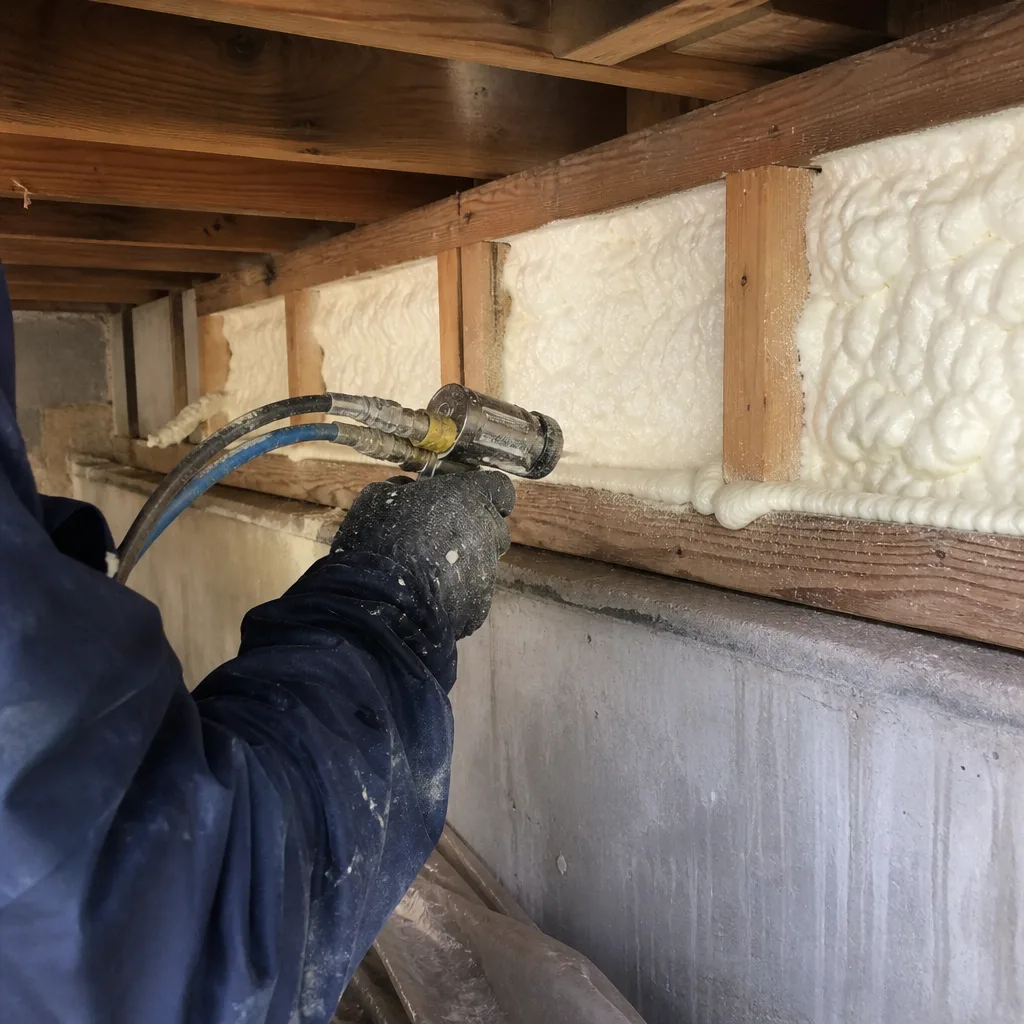
- Knauf EcoSeal shrinkage at rim joist transitions. In San Jose’s winter temperature swings, rim joist areas expand and contract more than mid-wall cavities. Knauf EcoSeal works well when applied at the right temperature but can shrink and crack at the sill plate junction if sprayed on cold days. We see hairline gaps that let in air and even carpenter ants. The fix is removing the cracked bead and reapplying in the manufacturer’s temperature window, then checking with a smoke pencil.
- Inconsistent lift thickness leaving hot spots. San Jose’s summer heat is brutal on attics. When Knauf closed-cell is sprayed thin in some areas and thick in others, you get thermal bridging and hot ceiling patches you can feel from below. We use a depth gauge and thermal camera to map the thin spots, then build up the foam to the target R-value Glenn specifies for your ceiling assembly.
- Spray foam applied over knob-and-tube wiring in pre-1950 San Jose homes. This is a code and safety issue we flag immediately. Knauf foam encasing old wiring creates a fire hazard because it blocks heat dissipation. In neighborhoods like Naglee Park and the Rose Garden area, we’ve had to carefully remove foam around legacy electrical before proceeding. If you own an older San Jose home, get the wiring checked before anyone sprays.
Our Knauf Spray Foam Insulation Process
Here’s how a Knauf spray foam job runs with us, from first call to final walkthrough.
- 1
Call and talk to a real person. You reach a live dispatcher at (669) 333-3579. We listen, ask about your specific problem, and schedule a visit in a committed arrival window.
- 2
On-site inspection and honest diagnosis. A background-checked technician examines your existing Knauf insulation, checks the depth, looks for voids, and uses a thermal camera if needed. We tell you what’s actually wrong, not what’s easiest to bill.
- 3
Written price before any work. We put the exact number in writing, including the Knauf product we’ll use, the target R-value, and the scope. No door-step price changes, no surprises.
- 4
The installation or repair. We prep the area, mask off what needs protecting, and apply the Knauf foam to specification. Our crew wears full PPE and leaves the site cleaner than they found it.
- 5
Post-install inspection. We check thickness with a depth gauge, scan for voids, and confirm the foam cured properly.
- 6
The 365-Day Done Right Promise. Every job includes our written guarantee. If anything isn’t right within 365 days, we come back and fix it at no charge.
What Knauf Spray Foam Insulation Costs in San Jose
Here are the real numbers we quote in the San Jose market. These are installed prices, not material-only.
- Rim joist sealing with Knauf EcoSeal: $600 to $1,100
- Garage ceiling with Knauf open-cell (400-600 sq ft): $1,500 to $2,800
- Full attic spray foam (1,000-1,500 sq ft) with Knauf open-cell: $2,400 to $4,200
- Full attic spray foam with Knauf closed-cell: $3,200 to $5,800
- Roof deck spray foam in San Jose’s climate zone: $3,000 to $5,200
What moves the price: the condition of the existing insulation, access difficulty, whether we’re removing old Knauf or applying fresh, and the target R-value. San Jose’s climate zone 4 means we typically recommend R-38 for attics. Call (669) 333-3579 for a written quote. It’s free and it’s the exact number you’ll pay.
Why San Jose Homeowners Call Woolsey Insulation San Jose for Knauf Work
We don’t chase every insulation brand under the sun. We focus on attic and spray foam work, and Knauf is one of eight brands we install including Owens Corning, Johns Manville, Rockwool, CertainTeed, Icynene, Demilec, GreenFiber, and Reflectix for radiant barrier applications. If Knauf’s not the right fit for your home’s specific problem, we’ll tell you and quote the material that is. That’s the Kingswell Way: say the price, show up in the window, leave it cleaner than you found it, put the guarantee in writing, and come back if it fails. Glenn Hartley leads our San Jose crew and he’s been running foam and batt work across California for decades. His rule is simple. Get the R-value right, and the house does the rest of the work for you.
FAQs
Knauf’s material warranty covers manufacturing defects in the foam itself, but it doesn’t cover installation errors like improper mixing, off-ratio spraying, or poor substrate preparation. Those are the installer’s responsibility. Our 365-Day Done Right Promise covers our workmanship in writing, so if our installation fails within a year, we return and fix it at no charge.
Yes, in most cases. Knauf open-cell and closed-cell foams can be applied alongside existing foam from other manufacturers as long as the existing foam is dry, intact, and properly bonded. We inspect the old material first, because spraying over failed foam just hides the problem.
Knauf spray foam properly installed should last the life of the home. San Jose’s dry summers and mild winters are actually easier on foam than coastal humidity. The failure we see most often is not material breakdown, it’s installation-related: off-ratio mixing, thin spots, or poor adhesion from a rushed job.
For most San Jose attics, open-cell Knauf is the better value because it air-seals well at a lower cost and fits our climate. Closed-cell makes sense if you need a vapor barrier, have a low-slope roof prone to leaks, or want a roof deck application. We’ll give you a straight answer based on your specific house, not a brand pitch.
We keep same-day availability for emergency situations like exposed wiring, animal damage to existing foam, or a failed section leaving part of your house uninsulated. Call (669) 333-3579 and a live person will tell you exactly when we can get there. No voicemail, no automated system.
Written by Glenn Hartley, Owner, Woolsey Insulation San Jose at Woolsey Insulation San Jose, serving San Jose and nearby areas.