
CertainTeed Vapor Barrier Installation: The San Jose Owner’s Guide
CertainTeed vapor barrier installation in San Jose typically runs between $1,200 and $3,400 depending on attic size, access difficulty, and whether we’re replacing an existing barrier or installing one for the first time. We stock CertainTeed MemBrain and VaporRetarder-compatible material on our trucks, so most jobs in San Jose are completed same-day. The usual story we hear: a homeowner crawls up to check after a cold snap, finds condensation beading on the underside of the roof deck, or notices the old poly sheeting has gone brittle and torn. That’s the moment the barrier stopped doing its job, and the clock starts on moisture damage.
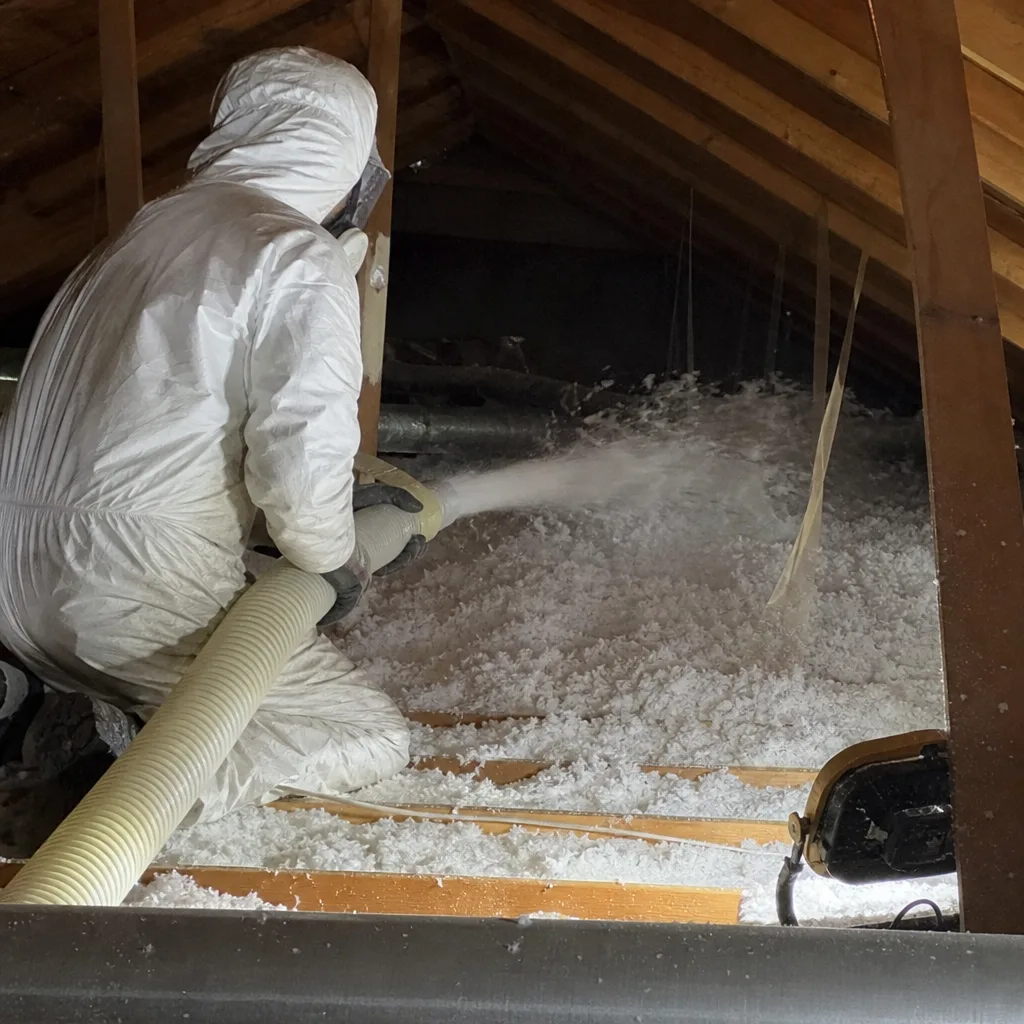
CertainTeed Vapor Barrier Installation: What It Actually Protects
A vapor barrier, or vapor retarder as CertainTeed calls it, controls how much moisture moves from your living space into the attic cavity. In San Jose’s climate, we get cool, damp winters and bone-dry summers. That swing is exactly why the material choice matters. CertainTeed’s MemBrain is what’s known as a smart vapor retarder: it changes its permeability based on humidity, letting moisture escape back down into the house in summer while blocking it from rising into the attic in winter. The older poly sheeting most San Jose homes have from 1990s construction doesn’t do that. It blocks in one direction only, and once it tears or the tape joints fail, it blocks nothing.
Which CertainTeed Models This Applies To
We install two CertainTeed vapor barrier products most often in San Jose: MemBrain and the VaporRetarder 6-mil poly line. MemBrain comes in 8-foot by 100-foot rolls and is the upgrade path we recommend for most Bay Area attics because of that humidity-responsive design. The 6-mil poly is the workhorse: straightforward, affordable, and perfectly suited for attics with blown-in fiberglass above a sealed ceiling plane.
If you’re trying to identify what’s currently in your attic, look for a printed grid pattern on the poly, or the CertainTeed name stamped along the roll edge. Older barriers from other brands typically have no grid. The gotcha we see in San Jose: if your home was built between 1985 and 2005 with an unvented attic, you may have a barrier rated for a different climate zone. California’s Title 24 energy code changed vapor barrier requirements over the years, and what was code-compliant then may be working against you now. That’s one reason we verify what’s up there before quoting anything.
Signs Your CertainTeed Vapor Barrier Installation Is Failing
- Condensation on roof decking in winter. When warm, moist air from the house reaches the cold underside of the roof, it condenses into water droplets. If you see beading or dark staining on the plywood, the barrier has a breach somewhere; the moisture is getting past it.
- Brittle or crumbling plastic sheeting. Standard poly degrades with heat exposure over time. San Jose attics regularly hit 130°F in summer, and after 15-20 years, the plastic turns sun-brittle and tears with a light touch.
- Musty smell that comes and goes. That intermittent odor, stronger after rain and fainter in dry stretches, usually means moisture is entering the attic and soaking into insulation or framing. A working vapor barrier keeps that moisture on the living side of the ceiling.
- Visible gaps or separation at tape seams. The barrier is only as good as its seams. When factory tape or the original contractor’s tape fails, the vapor has a free path through. This is the most common failure point we see in San Jose attics built in the 1990s.
- Higher heating bills than your neighbors with similar homes. Wet insulation loses its R-value. If your attic insulation is damp, it’s underperforming, and your furnace works harder to keep the house warm. The vapor barrier failure is usually the cause upstream.
Replacement Cost & What’s Included
For a typical San Jose single-story home with attic access from a hallway hatch, you’re looking at $1,200 to $2,200 for removal of the failed vapor barrier and installation of new CertainTeed MemBrain. Two-story homes or attics with tight clearances, knee walls, or HVAC equipment blocking access run $2,400 to $3,400. The price always includes removal and disposal of the old material, seam sealing, barrier fastening, and a full visual inspection of the surrounding insulation for moisture damage. We give you the exact written number before any work starts; that’s the Kingswell Guarantee, and we don’t move off it at the door.
DIY or Call Us?
Vapor barrier work isn’t dangerous like garage door springs or electrical panels, but it is unforgiving. A single missed seam or a small tear you didn’t catch means the barrier fails anyway, and you won’t know until condensation reappears next winter. What you can safely do: look for obvious gaps with a flashlight, or check if the sheeting is brittle. What goes wrong for DIY: climbing in attics without proper decking, stepping through the ceiling, misidentifying the barrier material, and taping seams with the wrong product. CertainTeed requires their own seam tape for MemBrain; standard duct tape fails within months. If you’d rather not crawl up there at all, call (669) 333-3579 and we’ll do the inspection as part of the estimate.
Key Takeaways
- CertainTeed vapor barrier installation in San Jose runs $1,200 to $3,400 installed, depending on attic size and access.
- We stock CertainTeed MemBrain and 6-mil poly on our trucks, so most jobs are same-day.
- Older poly sheeting typically lasts 15-20 years in San Jose’s hot attic conditions before going brittle.
- Seam tape failure is the most common breach point, not the sheet material itself.
- Every job gets a written price before work starts, a written guarantee, and a 365-Day Done Right Promise.
FAQs
CertainTeed MemBrain is rated to last the life of the building when installed correctly, but the older poly sheeting in most San Jose attics realistically fails after 15 to 20 years due to heat degradation. The smart vapor retarder material doesn’t have the same brittleness problem because its permeability changes with humidity, reducing the stress on the material. Call (669) 333-3579 and we’ll tell you what’s actually up there.
Yes, if the tear is localized and the surrounding material is still flexible and intact, a patch and proper CertainTeed seam tape can stop the leak. But if the poly has gone brittle across its surface, patches won’t hold; the material will keep cracking. We’ll give you an honest assessment rather than selling a full replacement you don’t need.
For a standard San Jose single-story home, removal and replacement takes four to six hours. Larger attics with complicated framing or restricted access can stretch to a full day. We schedule a specific arrival window and show up on time; call (669) 333-3579 for an exact quote.
We keep CertainTeed MemBrain and 6-mil VaporRetarder on our trucks, along with the matching seam tape. We also work with seven other insulation brands, including Reflectix, Owens Corning, Johns Manville, Knauf, Rockwool, Icynene, and Demilec, so we’re not tied to one manufacturer’s material. That means we install the right product for your attic, not just whatever happens to be on the truck that day.
No. We’re an independent insulation contractor that installs CertainTeed products among the eight brands we carry. We’re not a CertainTeed dealer or franchise. Glenn Hartley, our owner, learned the trade at Los Angeles Trade-Technical College and has been running insulation jobs across California for decades. His take: get the R-value right, and the house does the rest of the work for you.
Written by Glenn Hartley, Owner, Woolsey Insulation San Jose at Woolsey Insulation San Jose, serving San Jose and nearby areas.