
Icynene Attic Air Sealing: The San Jose Owner’s Guide
If your Icynene open-cell or closed-cell spray foam has pulled away from framing, cracked along seams, or left gaps around can lights and pipe penetrations, we stock the materials to re-seal it and typically complete the work the same day in San Jose. Most Icynene attic air sealing repairs in San Jose run between $450 and $1,200 depending on how much foam has failed and how accessible the trouble spots are. You’ll get an exact written number before we touch anything, and the repair is covered by our 365-Day Done Right Promise.
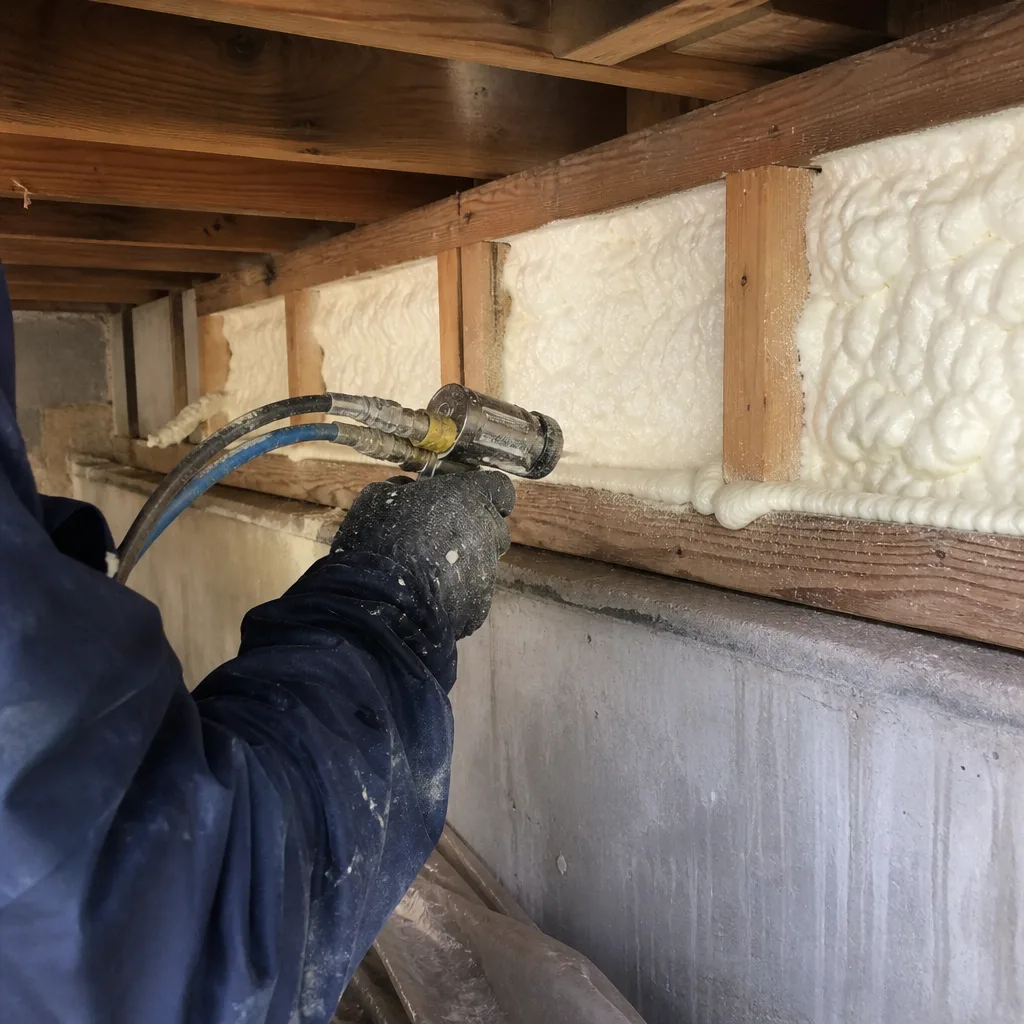
What we usually hear first is the symptom, not the diagnosis: a bedroom that won’t hold temperature, a utility bill that climbed and stayed there, or dust showing up faster than it used to. When we get into the attic, the story is almost always the same. The foam did its job for years, then heat cycling, roof movement, or a bad original install let air start moving through again. San Jose’s hot attic summers are hard on foam. Attic temperatures routinely hit 140°F in July and August, and that repeated expansion and contraction is what eventually breaks the air seal.
We’re an independent San Jose insulation contractor, not a corporate Icynene branch, which means we can honestly tell you when the material can be saved and when it can’t. Glenn Hartley and our crew have been doing this long enough to know the difference without opening up more than we need to.
Which Icynene Models This Applies To
Icynene makes two foam families that show up in San Jose attics, and they fail differently. Icynene Classic (open-cell, half-pound foam) is the older workhorse you’ll find in homes built from the early 2000s through about 2015. It’s soft and spongy, and it’s great at air sealing but not structural. Icynene ProSeal (closed-cell, two-pound foam) is denser, acts as a vapor barrier, and is more common in newer construction and any attic where the roof deck itself was foamed. The third line, Icynene Lite, shows up less often in attics and more in walls, but we do see it occasionally.
The compatibility gotcha most people miss: you cannot top up failed open-cell foam with closed-cell. They expand at different rates and won’t bond properly at the seam. If you have Classic and it’s failing, the repair uses open-cell compatible material. If you have ProSeal, closed-cell goes back in. We carry both on the truck, along with material data sheets that match the original install specs.
On the OEM versus aftermarket question: Icynene is a brand of Huntsman Building Solutions, and the foam we’d use for a repair is Icynene product matched to your line, not a generic substitute. For small jobs like sealing around a bath fan or a plumbing vent, a comparable Huntsman-compatible open-cell or closed-cell kit performs identically. We don’t stock mystery foam. Every product we use comes from eight brands we’ve worked with for years: Owens Corning, Johns Manville, Knauf, Rockwool, CertainTeed, Icynene, Demilec, and GreenFiber. That list exists because some homes need one thing and some need another, and the material should match the house, not whatever’s rolling around in the back of the truck.
Signs Your Icynene Attic Air Sealing Is Failing
- Rooms directly under the attic won’t hold temperature. The foam has pulled away from the top plates or the roofline in enough places that conditioned air is escaping and attic air is pushing down through recessed lights and interior wall cavities.
- Your energy bill spiked and stayed there. A single bad air sealing repair can raise cooling costs 15 to 20 percent in San Jose’s summer months. When the seal fails, your HVAC runs longer just to fight the heat bleeding in from the attic.
- Dust accumulating on ceiling fans and upper shelves. Attics collect dust. When the air seal breaks, that dust gets pulled into the house through every gap in the ceiling plane. It’s not dirty ducts. It’s a broken seal.
- You can feel a draft near attic hatches, can lights, or where walls meet the ceiling. Open-cell foam settles and shrinks as it ages, especially in homes where the attic stays hot for months at a stretch. The gaps start small and get wider.
- Visible cracks or pull-away in the foam itself. If you’ve been up there and seen foam separated from rafters by even a quarter inch, the seal is already compromised. Heat cycling in a San Jose attic does this over a period of years, not decades.
Replacement Cost & What’s Included
Here’s the honest range for San Jose, based on what we’ve actually billed over the last few years.
| Scope of Work | Typical Installed Cost |
|---|---|
| Small spot repair (single penetration, can light, or pipe chase) | $200 – $350 |
| Moderate re-seal (multiple penetrations, hatch perimeter, top plates) | $450 – $850 |
| Extensive repair (large areas of failed foam, re-treating entire roof deck sections) | $850 – $1,500 |
Most jobs land in the middle. The variables are how much foam has failed, whether we need to cut out and remove old material first, and how tight the attic access is. Every quote includes the foam, the labor, surface prep, and cleanup. The Kingswell Guarantee means the number we hand you in writing before work starts is the number you pay. No door-step add-ons. And if the repair fails within 365 days, we come back and fix it at no charge. That’s a written guarantee on every job, not a verbal promise.
DIY or Call Us?
The messy truth about spray foam: it’s not a caulk gun and a prayer. Two-part foam kits require exact temperature control, precise mix ratios, and an instinct for how much expansion you’re going to get in a tight cavity. Get the ratio wrong and the foam never cures. Get the temperature wrong and it cures too fast and pulls away before it bonds. We’ve repaired more than a few DIY foam jobs where the homeowner had to cut out the whole mess and start over at twice the cost.
What you can safely do is identify the problem. Check the attic hatch seal. Look for gaps around can lights and bath fan housings. Note where you feel drafts inside the house. That information saves us time on the job and saves you money. Then call (669) 333-3579. We’ll send a background-checked, uniformed technician to your San Jose home, give you a written price for the exact repair, and get it done right the first time.
FAQs
Properly installed Icynene foam should maintain its air seal for 20 to 30 years in a San Jose attic. The foam itself won’t degrade, but the adhesive bond can fail if the original install missed a spot, if the roof deck shifts, or if extreme heat cycling causes separation. We see most failures as incomplete original coverage rather than aged foam breaking down.
In most cases, failed Icynene can be spot-repaired without removing the entire attic treatment. We cut out the compromised section, prep the surface, and apply compatible foam that bonds to the existing material. Full replacement is only necessary when more than half the original foam has separated or the original install was thin enough that it never truly sealed. We’ll tell you which one you’re looking at before any work is approved. Call (669) 333-3579 for an honest assessment.
A typical attic air sealing repair in San Jose takes 2 to 4 hours from start to finish. Small penetration fixes can be done in under an hour. Larger jobs that require cutting out old foam and re-treating sections may run a full day. We’ll give you a committed arrival window when you book.
Yes. Our San Jose trucks carry Icynene open-cell and closed-cell foam, along with matching material from our other brand partners including Owens Corning, Johns Manville, Rockwool, CertainTeed, Demilec, GreenFiber, Knauf, and Reflectix for reflective applications. That means most repairs are done in one visit, not two.
Generally no. Insurance treats failed foam as normal wear and tear, not a covered event. The exception is if the failure was caused by a covered peril like storm damage or a fire. We can’t speak for your policy, but we can give you clear documentation of what we found and what we repaired if you need to file a claim.
Get the R-value right, and the house does the rest of the work for you. That’s been the rule since I learned this trade at Los Angeles Trade-Technical College, and it’s the rule our crew works by on every San Jose attic we step into. If your Icynene air sealing has failed, call (669) 333-3579. A live person answers, 24/7, and we’ll get your home sealed up right.
Written by Glenn Hartley, Owner, Woolsey Insulation San Jose at Woolsey Insulation San Jose, serving San Jose and nearby areas.