
Icynene Radiant Barrier Installation: The San Jose Owner’s Guide
Icynene radiant barrier installation in San Jose typically runs between $1.50 and $3.00 per square foot installed, depending on attic access, existing insulation condition, and roof geometry. We stock Icynene-compatible radiant barrier materials on our trucks and can usually schedule installation within 3 to 5 business days, with same-week appointments available during slower seasons. Most San Jose homeowners discover their radiant barrier has failed during a hot spell, when the upstairs rooms suddenly won’t hold temperature the way they used to, or when a visual check reveals sagging, tearing, or delamination at the foil seams.
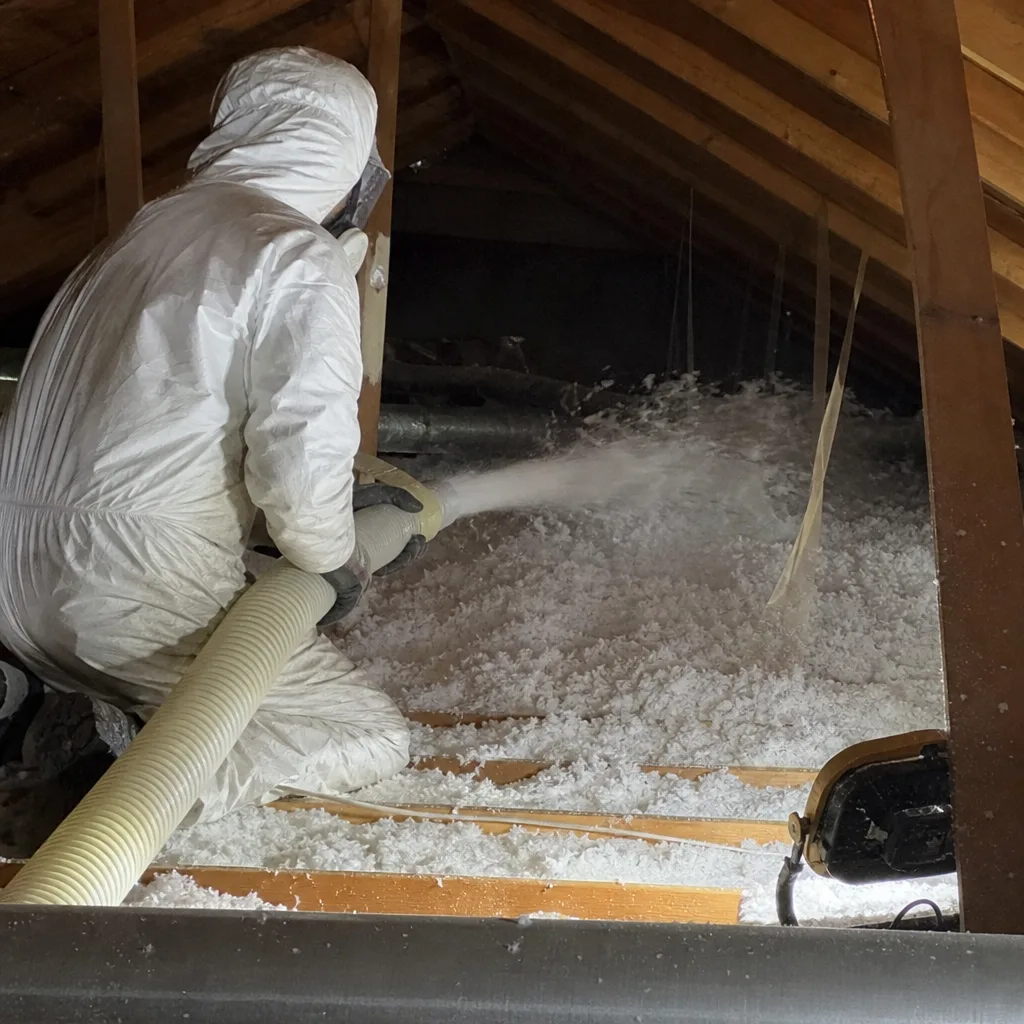
What we see most often in San Jose attics is radiant barrier that was stapled to the underside of roof rafters ten or fifteen years ago and has since pulled loose. The foil tears at the staple points, dust builds up on the reflective surface, and performance drops off a cliff. A radiant barrier only works when the reflective surface faces an air gap and stays clean. Once it sags against insulation or gets coated in attic dust, it’s doing almost nothing.
We’re an independent insulation contractor in San Jose, not affiliated with Icynene. That matters because it means we’ll tell you honestly whether Icynene’s radiant barrier line is the right fit for your attic, or whether a different material would do the job better for less money.
Key Takeaways
- Installed cost in San Jose: $1.50 – $3.00 per sq ft, written price before we start
- Icynene-branded radiant barrier is a foil laminate; most failures are mechanical, not material defects
- Dust, sagging, and staple-point tearing are the big three failure modes in San Jose’s dry climate
- We give you the exact written number before any work begins, every time
Which Icynene Models This Applies To
Icynene’s radiant barrier products fall under their building-envelope line rather than their spray foam catalog. The most common version we see in San Jose attics is a single-layer or double-layer foil laminate, typically 48 inches wide, sold in rolls of 125 or 250 square feet. Some older installations used a perforated variant designed for use over existing attic floor insulation; newer installs more commonly use the non-perforated version stapled to rafters.
The compatibility gotcha most homeowners don’t know: Icynene’s radiant barrier is engineered to work with their open-cell and closed-cell spray foam systems, but it installs the same way as any quality foil radiant barrier. If you’re replacing a failed section, the critical measurement is the rafter spacing in your attic. San Jose homes built in the 1960s and 1970s often have 24-inch on-center rafter spacing, while newer construction is typically 16-inch. You need to know that number before buying any material, because a 48-inch roll covers three 16-inch bays but only two 24-inch bays.
On the OEM versus aftermarket question: Icynene’s branded radiant barrier is a solid, tested product, but it’s manufactured by third-party laminate suppliers to Icynene’s spec. Quality aftermarket equivalents with equivalent perforation patterns and emissivity ratings (typically 0.05 or lower on the reflective face) perform identically in a San Jose attic. We’ll quote the Icynene-branded material when that’s what you want, and we’ll also show you the equivalent non-branded option if the price difference is meaningful. The material choice fits the home and your budget, not whatever happens to be on the truck, though we do stock both.
Signs Your Icynene Radiant Barrier Installation Is Failing
- Sagging between rafters. The foil has pulled away from its staple points and is drooping toward the insulation below. This eliminates the air gap on one or both faces, which is what makes a radiant barrier work. Cause is almost always under-driven staples or thermal expansion cycles in San Jose’s hot attic summers.
- Visible tearing at staple lines. Wind from attic ventilation, or simply years of expansion and contraction, causes the thin foil to tear where the staples hold it. In Ranch-style homes near Willow Glen with older vented attics, we see this constantly.
- Dull, dusty surface that used to be shiny. Reflective foil only reflects when the surface is clean. San Jose’s dry season puts fine dust into every attic. A dusty radiant barrier performs barely better than no radiant barrier at all.
- Upstairs rooms noticeably hotter in summer, cooler in winter. Your attic is hotter or colder than it should be, and the HVAC system is working harder to compensate. Look at your summer utility bills compared to two or three years ago.
- Condensation staining on the foil or underside of the roof decking. This is less common in San Jose than in coastal climates, but it happens in attics with poor ventilation. Moisture trapped against the foil breaks down the adhesive layers and delaminates the product.
One thing worth saying plainly: a radiant barrier is a heat-reflective complement to insulation, not a replacement for it. If your attic has R-19 fiberglass batts from 1985 under a failed radiant barrier, replacing the radiant barrier without addressing the insulation only solves half the problem.
Replacement Cost & What’s Included
For a typical San Jose single-family home with 1,200 to 1,800 square feet of attic floor area, Icynene-compatible radiant barrier replacement runs $1,800 to $5,400 installed. Smaller attics and straightforward rafter layouts land on the low end; vaulted ceilings, tight access, or attics with heavy existing insulation that needs moving land on the high end.
Here’s what that number includes, line by line:
- Material: $0.35 – $0.80 per sq ft depending on single or double layer, Icynene-branded or equivalent
- Labor: $1.00 – $1.80 per sq ft, higher for low-slope roofs and cramped access
- Removal of failed material: $0.15 – $0.40 per sq ft, bagged and removed from the attic
- Air sealing at top plates and penetrations: included in our standard install
Every quote comes as a written price before any work starts, no exceptions. You’ll see the material line, the labor line, and the exact total before we touch anything. The work is covered by our 365-Day Done Right Promise: if the installation isn’t right within 365 days, we come back and fix it at no charge, in writing. The Kingswell Guarantee also means a committed arrival window, a clean job site, and a written guarantee on every job. Call (669) 333-3579 and we’ll give you the exact number for your attic.
DIY or Call Us?
Radiant barrier installation is not a high-tension or electrical job, and a careful homeowner with a staple hammer, a sharp utility knife, and good kneeboards can do competent work. What separates a good DIY install from a failed one is attention to the air gap, the staple pattern, and the ventilation plan. We’ve fixed more than a few DIY installs where the homeowner stapled the foil directly against the roof decking with no air gap, which effectively turns the product into a very expensive vapor barrier doing nothing useful.
Where DIY goes wrong in San Jose attics specifically: our summers push attic temperatures past 140°F, which means you’ll be working in a hot, cramped space with poor footing. If you have blown-in insulation, walking through it shifts and compresses it, and you’ll need to restore depth when you’re done. If you’re working near recessed light fixtures or wiring, you’re working near heat sources that require clearance.
Our honest take: if you have a simple gable roof with exposed rafters and no insulation to work around, this is a weekend project for a careful owner. If your attic is tight, heavily insulated, or has any vaulted sections, call us at (669) 333-3579. We’ll give you a written price and a real arrival window, and the job gets done right with the guarantee in writing.
FAQs
Installed correctly with proper ventilation and adequate staple spacing, an Icynene radiant barrier or equivalent product lasts 15 to 25 years in San Jose’s climate. The product itself doesn’t degrade chemically; what fails mechanically is the fastener pattern and the accumulated dust on the reflective surface. Call (669) 333-3579 if you want us to inspect yours and give you an honest life-expectancy assessment.
Yes, if the failure is localized, like a torn section in one rafter bay or a few loose staples along one edge. We can re-staple, patch, and clean small sections. But if the material is sagging across most of the attic or the reflective surface is heavily dust-coated, replacement is almost always the better use of your money. We’ll show you the condition before recommending either path.
For a typical San Jose attic, our crew finishes the job in four to eight hours, including removal of failed material and cleanup. Larger attics or homes with vaulted sections may take a second day. We’ll give you a committed arrival window and a cleanup standard in the written quote, and the site is left cleaner than we found it.
Yes. Our San Jose crews carry Icynene-branded radiant barrier and quality equivalent material, plus the fasteners and sealants the job requires. When we arrive for an estimate we can often confirm material availability on the spot and schedule the install for that same week. Alongside Icynene, we also work with Reflectix and the other major manufacturers we trust, so you’re never locked into one brand’s price.
Ready for a real price and a real install date? Call (669) 333-3579 and a live person answers, 24/7. We’ll walk through what’s failing in your attic, quote the job in writing, and schedule the work on a real arrival window. Get the R-value right, and the house does the rest of the work for you.
Written by Glenn Hartley, Owner, Woolsey Insulation San Jose at Woolsey Insulation San Jose, serving San Jose and nearby areas. Glenn grew up in Los Angeles, trained at Los Angeles Trade-Technical College, and has spent decades installing insulation across California, from older Ranch-style homes near Willow Glen to newer construction closer to downtown San Jose.