
GreenFiber Radiant Barrier Installation: The San Jose Owner’s Guide
We install GreenFiber-compatible radiant barrier in San Jose attics most weeks, and the typical installed cost runs between $1,800 and $3,400 depending on attic square footage and access. Most jobs are completed in a single day, and we keep the material on our trucks so there’s no week-long wait for a special order. The way owners usually find us is simple: they climb up for holiday decorations, notice the foil facing is sagging or tearing away from the rafters, and realize the attic feels noticeably hotter than last summer.
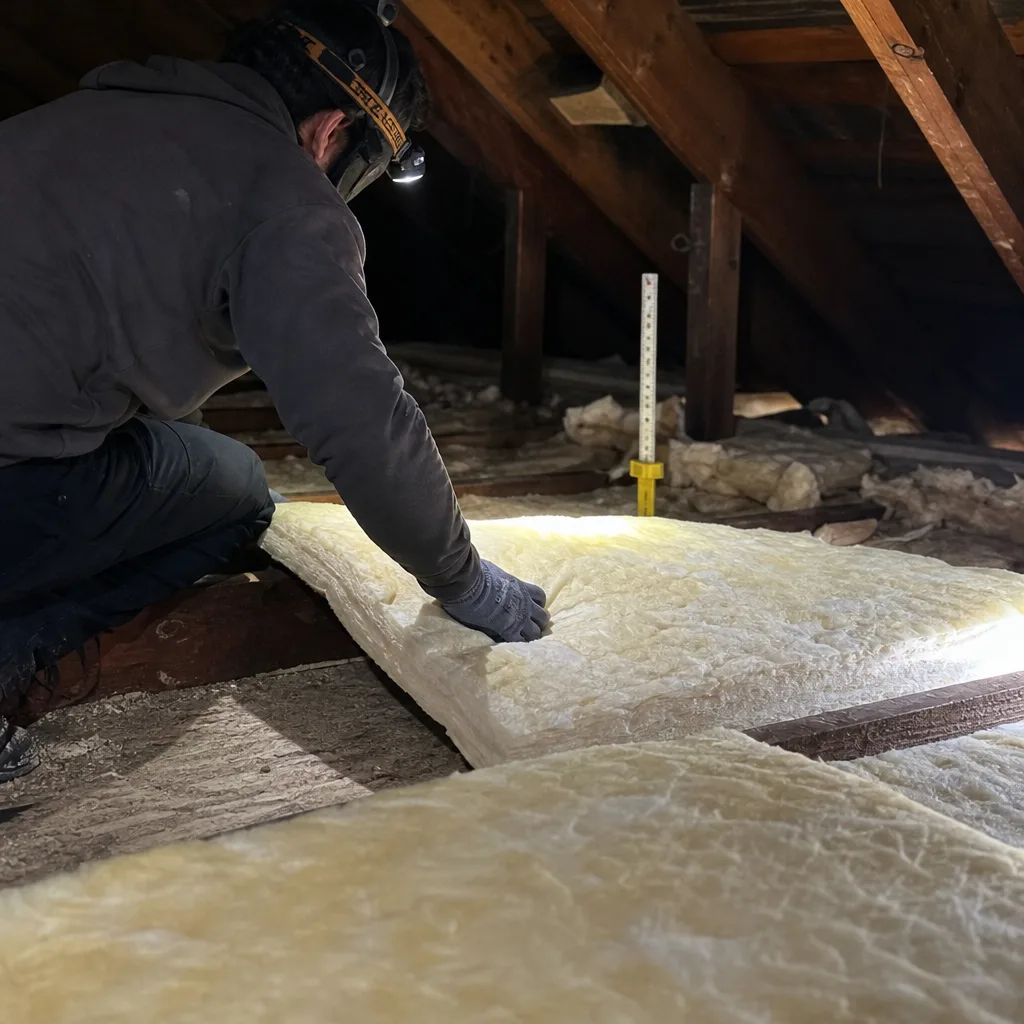
Radiant barrier is a thin reflective foil that gets stapled to the underside of your roof rafters. Its job is to reflect radiant heat from the sun back out of the attic before it can soak into your insulation and living space. In San Jose’s hot, dry summers, a properly installed radiant barrier can lower attic temperatures by 20 to 30 degrees. When it starts to fail, you feel it upstairs first.
Which GreenFiber Models This Applies To
GreenFiber’s radiant barrier products fall under their attic and insulation accessory line rather than a numbered model series the way you’d see with a furnace or water heater. What you’ll typically find in a San Jose home is either the GreenFiber single-sided reflective foil (foil on one face, kraft or poly backing on the other) or the double-sided version used when homeowners want additional emissivity facing both directions.
The compatibility gotcha we see most often: GreenFiber’s radiant barrier is designed to work with staple-up installation on rafters, not as a lay-over product on top of blown-in insulation. If someone laid it flat over your GreenFiber cellulose insulation, condensation can form underneath the foil during San Jose’s cool, damp winter mornings, and that moisture gets trapped against the insulation. That’s a fast path to reduced R-value and musty attic air. We stock both single and double-sided GreenFiber-compatible rolls on our trucks, along with quality aftermarket equivalents that match the perforation pattern. The perforations matter, by the way. They’re what let moisture vapor pass through so your attic can still breathe. An unperforated foil in the wrong application is a mold risk.
For the record: Woolsey Insulation San Jose is an independent insulation contractor. We install GreenFiber products because they’re good materials, but we’re not affiliated with GreenFiber corporate and that’s fine. It means our recommendation is based on what works in your attic, not a brand mandate.
Signs Your GreenFiber Radiant Barrier Installation Is Failing
If you’re wondering whether your radiant barrier is past its useful life, here are the five failure patterns we see most often in San Jose attics:
- Sagging or falling foil – Staples pull loose from rafters over time, especially in older homes where the wood is dry and crumbly. The foil sags, loses its tension, and the reflective surface no longer angles heat back toward the roof deck. We see this a lot in Willow Glen homes built in the 1950s and 60s.
- Tearing at staple points – Reflective foil is thin, and every staple creates a stress point. After years of seasonal expansion and contraction from San Jose’s hot days and cool nights, those staple holes tear wider and the foil starts to fall in sections.
- Dust buildup on the foil face – This is the one nobody thinks about. Radiant barrier works because the foil face is shiny and reflective. After 8 to 10 years, attic dust settles on the surface and cuts reflectivity significantly. A dull gray film on your once-shiny foil means it’s reflecting far less heat than it used to.
- Warmer upstairs rooms in summer – The most obvious symptom. If your upstairs bedrooms are 5 to 8 degrees warmer than downstairs on a 90-degree San Jose day, and you already have adequate insulation, the radiant barrier is likely no longer doing its job.
- Visible moisture stains on the foil backing – Dark water spots or streaking on the paper or poly backing indicate condensation is forming. In San Jose’s climate, this almost always points to either improper installation or a ventilation problem the foil is making worse.
Replacement Cost & What’s Included
For a typical 1,200 to 1,800 square foot single-story San Jose home, GreenFiber-compatible radiant barrier installation runs $1,800 to $2,800. Larger two-story homes with complex rooflines or limited attic access run $2,500 to $3,400. A small attic over a single-car garage or ADU might come in around $1,200 to $1,600.
| Scope | Typical San Jose Price |
|---|---|
| Small attic (under 800 sq ft) | $1,200 – $1,600 |
| Standard single-story (1,000 – 1,800 sq ft) | $1,800 – $2,800 |
| Large or two-story (1,800 – 3,000 sq ft) | $2,500 – $3,400 |
| Removal of old, failed barrier | $300 – $600 (often bundled) |
Every quote includes removal of the old material, preparation of the rafter surfaces, new GreenFiber-compatible radiant barrier with the correct perforation pattern for your attic’s ventilation setup, and full cleanup. The written price you get before work starts is the price you pay. That’s the Kingswell Guarantee, and it includes a 365-day written guarantee on the installation. If anything fails within that year, we come back and fix it at no charge.
DIY or Call Us?
We’ll be straight with you: installing radiant barrier is not a high-voltage or high-tension job the way garage door springs or electrical panels are. It’s physically demanding work in a hot, cramped space, but it’s not inherently dangerous. What makes DIY go wrong in San Jose attics is the heat itself. Attics here hit 130 degrees in summer months. Working overhead with a staple gun in that heat for three to four hours leads to rushed work, missed staples, and a barrier that sags within two years. Add in blown-in insulation you’re kneeling over, and the risk of a misstep through drywall is real.
What you can safely check yourself: take a flashlight up there on a cool morning, look for sagging sections, torn staple points, and dust buildup. That’s a 10-minute inspection. But for the replacement itself, call (669) 333-3579 and get a written quote. You’ll know the exact price before we touch anything, and the crew gets it done in a day.
How Much Does a Radiant Barrier Actually Save on Energy Bills?
In San Jose’s climate, a properly installed radiant barrier typically cuts the heat gain through your ceiling by about 20 to 25 percent during peak summer months. That translates to attic temperatures dropping 20 to 30 degrees on a hot afternoon. In real dollar terms, most San Jose homeowners see cooling savings of $100 to $200 per summer season, though the biggest difference is comfort: upstairs rooms that finally stay close to the thermostat setting. Radiant barrier works best paired with adequate blown-in insulation at a proper R-value. One without the other gives you half the benefit.
Does Radiant Barrier Work in Winter?
Yes, but differently than most people assume. Radiant barrier reflects radiant heat, not conductive heat. In winter, the foil face reflects some of your home’s interior heat back down into the living space, which helps slightly. But the bigger winter benefit is passive: it doesn’t trap moisture if it’s the right perforated product, and it adds a marginal thermal break. The honest truth from Glenn Hartley: radiant barrier is a summer product in San Jose. If winter heating costs are your concern, adding R-value to your insulation is the better investment.
FAQs
In San Jose’s climate, expect 8 to 12 years of effective performance before dust buildup and staple fatigue noticeably reduce its reflectivity. Attics with heavy dust infiltration or critter activity may need replacement sooner. Call (669) 333-3579 and we’ll inspect yours and tell you honestly whether it needs replacing or just a cleanup.
Yes, if the damage is limited and the remaining foil still has good reflectivity. We can patch a torn section for $200 to $450 depending on the size and location. But if large sections are sagging or dust-covered, patchwork gives you a checkerboard of performance. We’ll give you both options as written quotes and let you decide.
A standard single-story San Jose home takes 4 to 6 hours, start to finish. Two-story homes with complex rooflines can run 6 to 8 hours. Either way, it’s a one-day job and we leave the attic and the rest of the house cleaner than we found it.
We stock GreenFiber-compatible radiant barrier on our trucks, along with rolls from other quality brands including Reflectix. That means no multi-week wait for a special order when you need it done before the next heat wave. Call (669) 333-3579 and we can often schedule within a few days depending on the season.
Written by Glenn Hartley, Owner, Woolsey Insulation San Jose at Woolsey Insulation San Jose, serving San Jose and nearby areas.