
Knauf Crawl Space Encapsulation: The San Jose Owner’s Guide
Knauf crawl space encapsulation liner and vapor barrier replacement in San Jose typically runs between $1,800 and $4,200 installed, depending on square footage and access, and we can usually start within the week. Most San Jose homeowners discover their Knauf encapsulation has failed when they notice a musty smell drifting up through the floorboards or see condensation on ductwork in the crawl space. The liner itself is a thick polyethylene sheet, usually 10 to 20 mil, that gets mechanically fastened to the walls and floor of the crawl space to block groundwater vapor from migrating into the house.
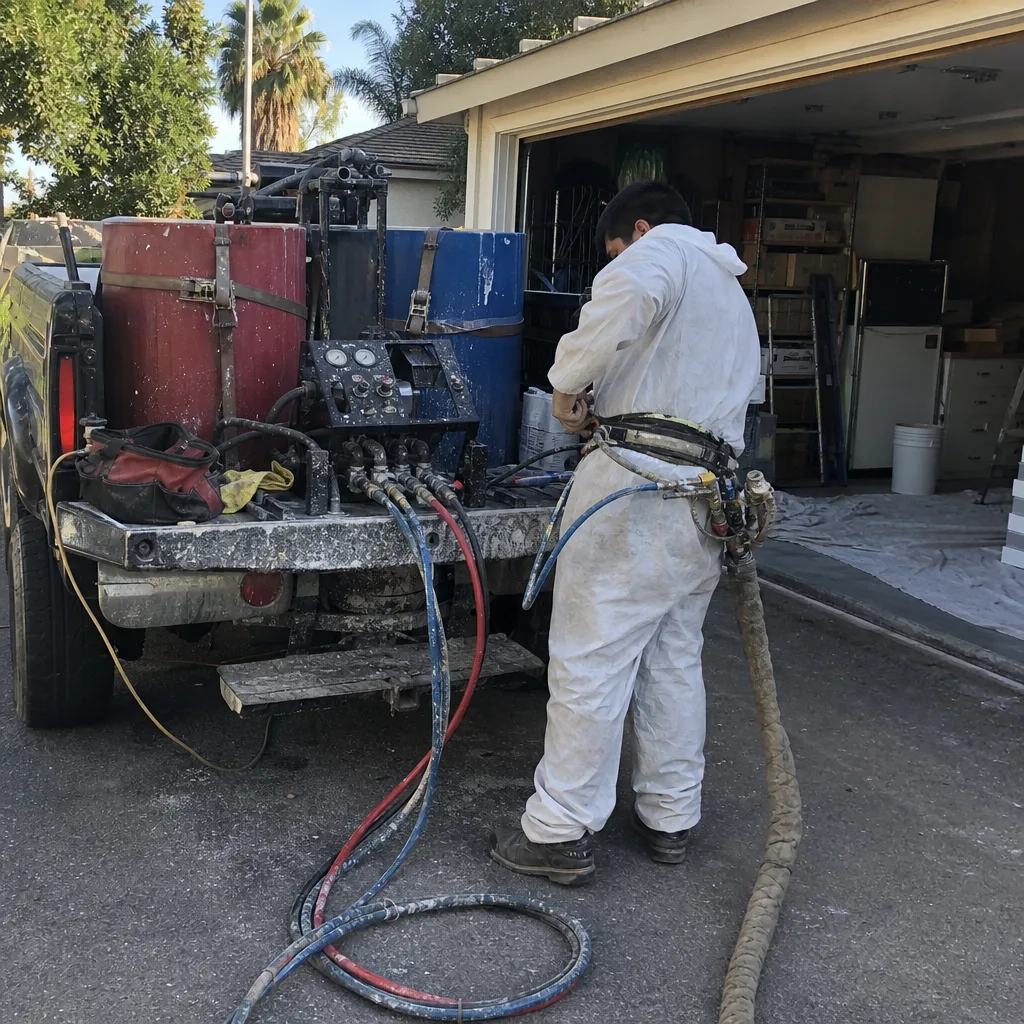
What we see most often in San Jose homes is liner that has torn at the seams or pulled away from foundation walls after a few years of seasonal soil movement. The adobe clay under many older neighborhoods, especially around Willow Glen and the Rose Garden, expands and contracts with winter rain and summer dry spells. That movement stresses the fasteners and seam tape. Once the liner separates, moisture finds the gap and the encapsulation loses its effectiveness. Glenn Hartley, our owner, has walked more San Jose crawl spaces than he can count, and he’ll tell you the same thing: a failed liner is almost never the plastic itself, it’s the attachment points and seams that give out first.
Key Takeaways
- Installed replacement cost for Knauf-compatible encapsulation runs $1,800 – $4,200 in San Jose.
- We stock Knauf-compatible liner on the truck, so most swaps happen in a single visit.
- Seam failure and wall detachment are the two most common failure modes in San Jose soil.
- Every job gets a written price before work starts and a written guarantee when it’s done.
Which Knauf Models This Applies To
Knauf’s crawl space encapsulation products fall under their insulation and building materials line, with the most common being Knauf Insulation’s crawl space vapor barrier and their EcoBatt and performance batt products that pair with it. The liner itself is typically specified by mil thickness (10, 12, or 20 mil) and roll width (most commonly 10 or 12 feet). If you still have the original packaging or an invoice, look for a product code starting with “K” followed by a series number; the mil thickness is usually stamped on the liner edge itself, about every 18 inches along the roll.
Here’s the compatibility gotcha many San Jose homeowners run into: Knauf sells both a basic 10 mil barrier (common in builder-grade installs) and the heavier 20 mil puncture-resistant liner, and the seam tape and mechanical fasteners are not interchangeable between them. The 20 mil liner requires a different tape adhesion rating and longer fasteners. When someone patches a 20 mil liner with tape sold for the 10 mil, the seam peels within months. We match every replacement to the existing mil thickness and use the correct tape and fastener spec for that liner weight.
On the OEM-versus-aftermarket question for Knauf encapsulation specifically: Knauf does not sell direct to homeowners, so you’re either buying through a distributor or having a contractor source it. Quality aftermarket liners made to the same mil thickness and ASTM E1745 standard perform equivalently in our experience, and they often cost 15 to 20 percent less than Knauf-branded liner. We stock both options and will quote either, so you’re not locked into a brand name if the spec matches.
Woolsey Insulation San Jose is an independent insulation contractor, not affiliated with Knauf. We work with eight insulation and barrier brands including Knauf, Owens Corning, Johns Manville, and Reflectix, so the material we recommend fits the conditions in your San Jose crawl space, not whatever happens to be on our truck that day.
Signs Your Knauf Crawl Space Encapsulation Is Failing
- Musty or damp smell in living areas above the crawl space. This is the most common first sign. It means the liner has developed an opening somewhere and moisture vapor is rising into the floor assembly. By the time you smell it, the breach has usually been open for weeks.
- Condensation on HVAC ducts or floor joists visible from the crawl space entrance. When the liner fails, relative humidity in the crawl space climbs above 70 percent. Metal ductwork sweats at those levels, and that moisture leads to rust and mold on wood joists over time.
- Visible tears, sagging plastic, or liner pulling away from foundation walls. San Jose’s clay soil expands in winter rains and contracts in summer. That movement flexes the liner, especially at the wall-to-floor transition, and over several seasons the fasteners work loose.
- White mineral deposits (efflorescence) on concrete foundation walls above the liner line. This tells you moisture is wicking through the concrete. The liner is either too short on the wall or has separated below the sill plate, letting groundwater vapor move up through the block or poured concrete.
- Increased indoor humidity readings in the 60s or 70s percent range during summer. A properly encapsulated crawl space in San Jose should read between 45 and 55 percent relative humidity. Sustained readings above that point, especially when the AC is running, usually mean the vapor barrier has failed and the crawl space is exchanging air with the outside.
Replacement Cost & What’s Included
For a typical San Jose home with an 800 to 1,200 square foot crawl space, a full Knauf-compatible liner replacement with wall attachment, seam sealing, and pier wrapping runs $1,800 to $4,200 installed. Smaller crawl spaces under condos or townhomes run on the lower end; tall, complex crawl spaces with multiple piers, plumbing penetrations, and low clearance run higher. We give you a written, line-item price before any work starts, so the number you’re quoted is the number you pay, not a starting point for negotiation at the door.
The price includes removing the old failed liner, inspecting the ground and foundation walls for standing water or drainage issues, installing the new Knauf-compatible liner at the correct mil thickness for your conditions, mechanically fastening it to the walls with the proper fasteners, sealing all seams and penetrations with the correct tape for the liner weight, and wrapping any support piers. Every job includes The Kingswell Guarantee: a written price before work starts, a committed arrival window, a clean job site when we leave, and a written guarantee on the work. If anything fails within 365 days, we come back and fix it at no charge.
What drives cost differences in San Jose specifically: access. Older homes in neighborhoods like Naglee Park and Alum Rock often have crawl space entrances under 24 inches high, which slows installation and requires more time on hands and knees. Newer construction in Silver Creek or Evergreen sometimes has standing water issues that need a sump pump or drainage correction before a liner goes down. We’ll flag those issues in the estimate, not spring them on you mid-job.
DIY or Call Us?
Crawl space encapsulation liner is not inherently dangerous to work with, unlike garage door springs or electrical panels. But the work is physically demanding: you’re in a dark, confined space, often with less than 30 inches of clearance, dragging 100-pound rolls of liner across dirt and around piers. The risks are real: cuts from old fasteners, knee and back strain, and the very real possibility of installing a liner that fails within a year because the seams weren’t cleaned properly or the tape was applied to dusty plastic.
What you can safely check yourself: the condition of the liner at the crawl space entrance, visible tears or sagging, and whether the liner is still attached at the top of the foundation walls. You can also place a humidity gauge in the crawl space and check it after a week. If the liner has separated or torn, that’s a job for trained technicians with the right material on hand. We can usually reach it in a single visit, and we’ll show you exactly what we replaced and why. Call (669) 333-3579 and we’ll give you an honest assessment and a written price.
FAQs
A properly installed Knauf-compatible 12 to 20 mil liner typically lasts 15 to 20 years in San Jose conditions, while a 10 mil builder-grade liner may only last 8 to 12 years before seam failure or puncture. The biggest factors are installation quality at the seams and fastener points, plus the soil movement in your specific neighborhood. Call (669) 333-3579 and we can tell you what mil thickness you currently have and what reinstallation should cost.
Small tears or seam separations in a liner that is otherwise in good condition can sometimes be repaired with the correct tape and surface preparation, but any liner showing multiple tears, wall detachment, or damage around the perimeter should be replaced. Patching a liner that is already failing elsewhere just shifts the moisture problem to the next seam. If you’re not sure whether yours can be patched, call (669) 333-3579 and we’ll give you a straight answer, even if the answer is that you don’t need us yet.
A full liner replacement in a typical San Jose crawl space takes one day for homes under 1,000 square feet, and up to two days for larger or more complex spaces with multiple piers, low clearance, or drainage work needed. We arrive in a committed window, we finish the job that day when possible, and we leave the crawl space cleaner than we found it.
Yes, our San Jose crews carry Knauf-compatible liner in 10, 12, and 20 mil thickness plus the matching seam tape and fasteners, so most replacements can be completed in a single visit without waiting on a distributor order. Get the R-value right, and the house does the rest of the work for you. Call (669) 333-3579 for a free estimate and a written price before anything gets installed.
Written by Glenn Hartley, Owner, Woolsey Insulation San Jose at Woolsey Insulation San Jose, serving San Jose and nearby areas.