
Rockwool Attic Air Sealing: The San Jose Owner’s Guide
Rockwool attic air sealing in San Jose typically runs between $1,200 and $3,400 installed, and our crews complete most single-story homes in one day. We stock the sealing materials, canisters, and Rockwool-compatible batts needed for the job on our trucks, so there’s no second trip and no waiting on a supplier. Most San Jose homeowners discover the problem the way you probably did: a utility bill that crept up, a bedroom that won’t hold temperature, or dust settling on everything despite a perfectly good Rockwool insulation layer already in place.
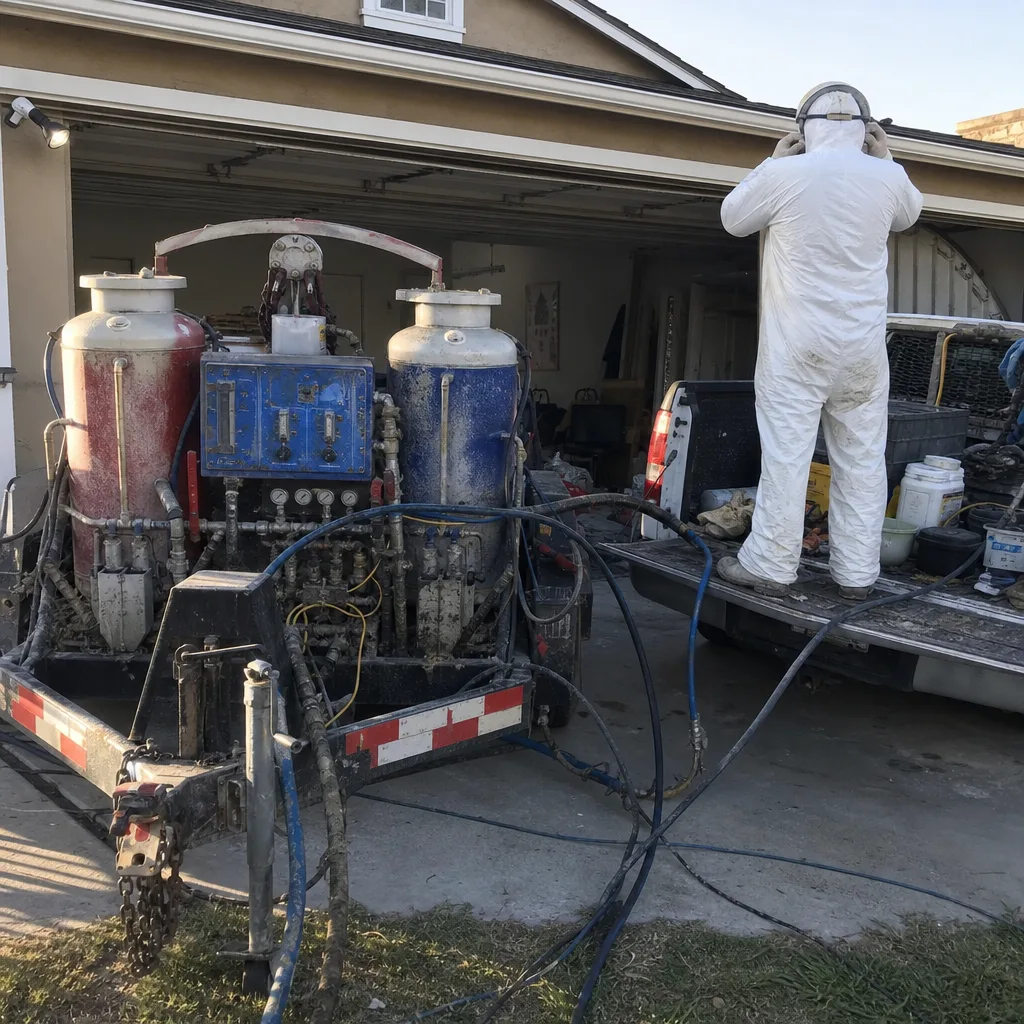
Here’s the thing about Rockwool in a San Jose attic. The material itself is doing its job. Rockwool batts and boards resist moisture, hold their R-value, and don’t settle like loose-fill. What fails is the air seal around and beneath it. Gaps at top plates, can lights, plumbing penetrations, and the attic hatch let conditioned air escape straight through the insulation. Rockwool filters air; it doesn’t stop it. The seal is the part that actually does the stopping.
If your Rockwool insulation is newer and you’re still seeing temperature swings between rooms, the seal is almost always the culprit. And in San Jose’s climate, with its dry summers and damp winter mornings, that seal gets worked harder than most people realize.
Which Rockwool Models This Applies To
Air sealing works with every Rockwool product line you’re likely to have in a San Jose attic. That includes Comfortbatt and Comfortboard (the residential workhorses), Safe’n’Sound (more common in interior walls, but we see it in attics above bedrooms), and older Roxul-era batts that predate the 2018 rebrand. If the label says Rockwool or Roxul, the sealing methodology is the same. What changes is how we work around it.
Here’s the compatibility gotcha most people miss: Rockwool batts are friction-fit, meaning they rely on being cut slightly wide and pressed into the cavity. That’s great for thermal performance, but it means the batt itself cannot seal irregular gaps at the top plate, around electrical boxes, or where framing meets drywall. You need a dedicated air seal material: one-part foam canisters, fire-rated caulk, or rigid foam board cut to fit. Using the wrong sealant with Rockwool, especially solvent-based products, can degrade the binder in the batts over time. We use only low-VOC, Rockwool-compatible sealants on every San Jose job.
If you’re trying to identify what’s in your attic, look at the facing. Rockwool residential batts have a visible stone-wool texture, a brownish-gray color, and the name printed directly on the product. If you can’t read the label, snap a photo and we’ll identify it when we come out for the estimate, at no charge.
We’re an independent San Jose insulation contractor, not a Rockwool affiliate, so we’re free to tell you honestly when the seal is the problem and when the Rockwool itself needs replacement. Most of the time, the Rockwool is fine. The seal around it is what failed.
Signs Your Rockwool Attic Air Sealing Is Failing
- Rooms that won’t hold temperature. Air moves through unsealed gaps at the top plate, bypassing the Rockwool entirely. You feel it as rooms that heat up or cool down faster than they should, even with the thermostat set correctly.
- Dust on surfaces within days of cleaning. Air leaking from the attic carries insulation fibers and dust into the living space. If your Rockwool is intact but you’re still dusting constantly, the air seal is compromised somewhere.
- A utility bill that’s higher than it should be in summer. San Jose gets real heat from June through September. An unsealed attic lets that heat radiate down through the ceiling, forcing your AC to run longer. Rockwool slows this; a proper seal stops it.
- A draft you can feel near ceiling fans, can lights, or the attic hatch. These are the three most common leak points we find in San Jose homes built between the 1950s and early 2000s. Put your hand near the hatch on a windy day. If you feel air, the seal is gone.
- Ice damming or condensation on the underside of the roof deck in winter. San Jose winters are mild but damp. Warm air leaking into the attic meets cold roof sheathing and condenses. Over time, that moisture damages framing and reduces your Rockwool’s effective R-value.
Get the R-value right, and the house does the rest of the work for you. The R-value was probably done right. It’s the seal that got skipped.
Glenn Hartley has been in attics across San Jose for years now, and he’ll tell you the same thing he tells every homeowner: about 8 out of 10 attics with newer insulation and persistent comfort problems have one thing in common. The seal around the insulation was never done, or was done with the wrong material, and it failed silently.
Replacement Cost & What’s Included
Attic air sealing in San Jose runs $1,200 to $3,400 installed, depending on attic size, accessibility, and how many penetrations need sealing. A smaller ranch home near Willow Glen with a low-pitch roof and a standard hatch will land near the lower end. A larger two-story off Blossom Hill with cathedral ceilings, a dozen can lights, and an HVAC chase will push toward the higher end. We give you a written price before any work starts, so the number you agree to is the number on the invoice. No add-ons at the door.
Here’s what’s included on every Rockwool attic air sealing job in San Jose:
- Sealant and materials matched to Rockwool for compatibility, including one-part foam, fire-rated caulk, and rigid board where needed
- Labor from background-checked, uniformed technicians who handle attics every day and know a San Jose roof deck in August
- Cleanup including removal of old sealant debris and a full sweep of the work area
- The Kingswell Guarantee in writing: a written price, a committed arrival window, a clean job site, and a written guarantee on the work for 365 days
If your attic already has Rockwool in place and we’re sealing around it, the cost is mostly labor and sealant. If we’re pulling back existing Rockwool to seal beneath it and re-set the batts, that adds time and cost. Either way, you’ll know the exact number before we touch anything.
DIY or Call Us?
There are a few things you can safely check yourself. Walk the attic perimeter and look for daylight at the top plates. Check the hatch weatherstripping. Note any can lights that aren’t IC-rated and sealed. These are inspection steps, and they’ll help you understand the scope before you call.
Where DIY goes wrong on this specific part is the sealant itself. Using the wrong foam against Rockwool can degrade the binder and reduce the batt’s performance. Overfilling a gap can bow drywall. Missing a penetration you can’t see from the hatch means you’ll pay to do the job twice. And working in a San Jose attic in summer, under a roof deck that’s been baking all afternoon, is genuinely dangerous without the right gear and hydration. We’d rather you make the call than make a hospital visit.
If you want a professional air seal installed correctly the first time, with a written price and a 365-day guarantee behind it, call us at (669) 333-3579. We’ll schedule an estimate, show up in a real arrival window, and give you a number you can count on.
FAQs
In San Jose’s climate, a properly installed air seal using Rockwool-compatible foam and caulk lasts 15 to 20 years before it needs inspection, and often longer in attics with good ventilation. Foam doesn’t break down from moisture the way older sealants did, but the temperature swings between our dry summers and damp winters do cause expansion and contraction, so we recommend checking the seal anytime you’re in the attic for other reasons. Call (669) 333-3579 to schedule an inspection.
Yes, in many cases we can spot-seal the failed areas rather than redoing the entire attic, especially if the original seal is intact everywhere except a few penetrations. The challenge is finding every leak, which requires a blower door test or a careful visual inspection of the entire perimeter. We’ll tell you honestly whether spot repair or full re-seal makes more sense for your attic, and the price you get is the price you pay.
Most Rockwool attic air sealing jobs in San Jose take 4 to 8 hours for a single story home, which means we’re in and out the same day. Larger homes or attics with extensive can light and HVAC penetration coverage can stretch to a second day. We’ll give you a clear timeframe when we write the estimate.
Yes. Our San Jose crews carry one-part foam, fire-rated caulk, rigid board, and Rockwool batts for re-setting, plus compatible products from Reflectix for the occasional reflective barrier job. If your seal has failed and the Rockwool itself is damaged, we can replace both in the same visit. Call (669) 333-3579 for a free estimate, and we’ll confirm availability for your specific attic before we arrive.
Written by Glenn Hartley, Owner, Woolsey Insulation San Jose at Woolsey Insulation San Jose, serving San Jose and nearby areas.