
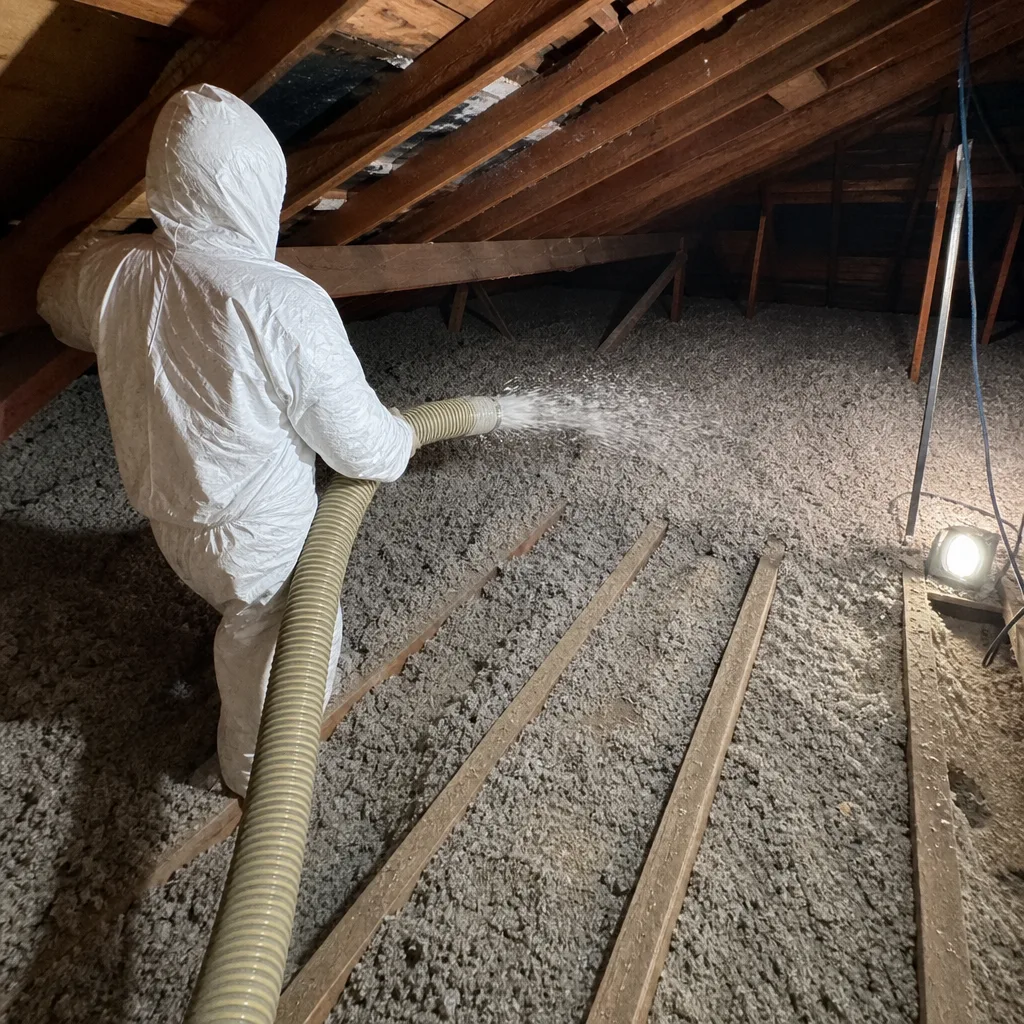
Crawl Space Encapsulation in San Jose, CA
Crawl space encapsulation in San Jose seals the dirt-floor area under your home with a heavy vapor barrier, closed-cell spray foam, and sealed vents to keep ground moisture and outside air out. Most San Jose homes need it when humidity under the house stays above 60%, when wood framing shows signs of dampness, or when musty odors drift up through the floors. Woolsey Insulation San Jose installs complete encapsulation systems with the same written-price, show-up-on-time, guarantee-in-writing approach we bring to every attic and spray foam job. Call (669) 333-3579 for a free estimate on your crawl space.
This page covers what full crawl space encapsulation involves, the signs you need it, what it costs in San Jose, and how the job runs from first call to final walkthrough. If you want a broader look at what we do under the house, start with our Crawl Space Encapsulation & Vapor Barrier in San Jose page.
A quick note on scope so there’s no confusion: Woolsey Insulation San Jose handles the insulation and vapor barrier work inside your crawl space. We do not install vents, sump pumps, dehumidifiers, or structural repairs. What we do, we do thoroughly – and we back it with the 365-Day Done Right Promise in writing.
Key Takeaways
- Typical cost: $6,000 to $15,000 for a full San Jose crawl space encapsulation, depending on square footage, access, and the condition of existing insulation
- What it includes: vapor barrier, spray foam on the perimeter walls and rim joists, sealing of foundation vents, and replacement or removal of old fiberglass
- Signs you need it: musty smells, sagging insulation, standing water after rain, high indoor humidity, cold floors in winter
- How long it takes: one to two days for most homes under 2,000 square feet
- Woolsey difference: written price before any work starts, uniformed background-checked technicians, 365-Day Done Right Promise on every job
When You Need Crawl Space Encapsulation
Most San Jose homeowners first notice something is wrong under the house when the smell drifts up through the floor. Here are the most common signs we hear about on calls in Willow Glen, Almaden Valley, Rose Garden, and Evergreen:
- Musty or earthy odor in the home – Ground moisture evaporates into the crawl space and carries that damp soil smell into your living areas. It’s strongest on humid Santa Clara Valley mornings and after rain.
- Sagging or falling fiberglass insulation – The paper backing and old insulation batts get heavy with absorbed moisture and pull away from the floor joists. Once it sags, it stops insulating.
- Cold floors in winter or hot floors in summer – Uninsulated crawl space walls and rim joists let outdoor air temperatures transfer straight through your floor framing. San Jose’s dry-season swings between 40°F winter mornings and 100°F August afternoons make this obvious.
- Visible condensation on ductwork or floor joists – When warm air meets cold surfaces under the house, water beads form. Over years this leads to rusted ducts, stained wood, and eventual rot.
- Standing water or damp soil after rain – The rainy winters in San Jose send water through the soil and under foundations. A vapor barrier alone can’t stop drainage problems, but encapsulation prevents that moisture from entering your home’s air.
- Pest or termite activity – Damp, dark crawl spaces with exposed soil are an open invitation. Sealing and conditioning the space removes the conditions pests need.
If you’re seeing one or more of these, encapsulation is the fix that addresses the root cause rather than masking it with air fresheners or a portable dehumidifier in the hallway.
Our Crawl Space Encapsulation Process
Here’s how a full encapsulation runs with our crew, step by step. We follow the same Kingswell Way on every job: say the price, show up in the window, leave it cleaner than you found it, put the guarantee in writing, and come back free if anything fails within 365 days.
- Inspection and written estimate – We measure the crawl space, check existing insulation, look at access points, and identify any venting or drainage issues that affect the scope. You get a written price before any work is scheduled – the exact number, no ranges, no “we’ll see once we get in there.”
- Prep and cleaning – We remove old, wet, or sagging insulation. We clear debris and level any sharp rocks or uneven areas on the dirt floor so the liner sits smooth. We treat the area with respect – this is your home’s foundation space.
- Vapor barrier installation – We lay a heavy-duty polyethylene liner across the entire dirt floor, running it up the foundation walls and overlapping all seams by at least 12 inches. The liner is sealed at every pier, column, and penetration.
- Closed-cell spray foam on walls and rim joists – We apply spray foam insulation – a two-part liquid that expands on contact and seals gaps airtight – to the perimeter foundation walls and the rim joist band around the floor system. We work with brands like Icynene and Demilec, chosen for their long-term performance in damp environments. This step creates the continuous thermal and moisture boundary that makes encapsulation work.
- Vent sealing and final air sealing – We seal existing foundation vents and any other openings that let outside air into the now-conditioned crawl space. This keeps San Jose’s summer heat and winter dampness where they belong – outside.
- Final inspection and written guarantee – We walk you through the completed work, show you photos if access is tight, and hand you the written guarantee covering the entire job for 365 days. If anything isn’t right within that year, we return and fix it at no charge.
Crawl Space Encapsulation Pricing in San Jose
Full crawl space encapsulation in San Jose typically costs between $6,000 and $15,000. Here’s what drives that number:
- Square footage of the crawl space – A 1,000-square-foot crawl space in a Cambrian ranch costs less than a 2,500-square-foot footprint under a larger two-story home in Almaden.
- Access and clearance – If your crawl space has tight clearance (under 3 feet), crews work slower, and material handling takes longer. If we can walk the full space, the job moves faster.
- Condition of existing insulation – Removing and disposing of wet, moldy, or old insulation adds labor. If the existing insulation is dry and intact, we may only need to remove the sections that conflict with the new system.
- Number of piers, columns, and penetrations – Every support pier and plumbing penetration requires careful liner sealing. Older San Jose homes with many piers have more detail work.
- Foundation wall height – Taller foundation walls mean more square footage of spray foam on the perimeter. Short crawl spaces (under 2 feet of wall) reduce that material cost.
- Rim joist complexity – Homes with irregular floor framing, cantilevered bump-outs, or many mechanical penetrations along the rim need more attention and material.
We give you the exact written number before any work starts. That price does not change when the crew shows up. You’ll never see a door-step surprise.
Call (669) 333-3579 for a free estimate on your crawl space encapsulation in San Jose. We’ll set an appointment, measure the space, and hand you a written price while we’re there.
Materials We Use for San Jose Crawl Spaces
San Jose’s climate is different from most of the country. We get hot, dry summers with average humidity around 40%, and mild, wet winters where soil moisture rises. The materials we choose have to perform across that full range. We work with eight manufacturers – including Icynene, Demilec, and GreenFiber – and recommend the product that fits your home, not whatever happens to be on the truck.
Vapor Barrier Liners
We install reinforced polyethylene liners rated for below-grade contact. In San Jose’s clay-heavy soil, this matters because clay holds moisture against the liner for months after the rainy season ends. A thin painter’s plastic fails in that environment. We use liners thick enough to handle foot traffic during future service visits and sharp enough pier edges without tearing.
Closed-Cell Spray Foam
For the foundation walls and rim joists, closed-cell spray foam is the right product for a simple reason: it does not absorb water. Open-cell foam acts like a sponge in a damp crawl space. Closed-cell foam – the type Icynene and Demilec both formulate for this application – creates a moisture barrier and an air seal in one pass. It also adds structural rigidity to the rim joist, which matters in older San Jose homes where the foundation meets the framing.
Why Not Batts or Blown-In Under the House?
Fiberglass batts absorb moisture from the air and gravity pulls them away from the floor joists over time. Blown-in fiberglass has no place in a crawl space – it settles, compresses, and gets wet. Once you encapsulate, the conditioned space under the house doesn’t need insulation in the floor cavity at all. The thermal boundary moves to the foundation walls and rim.
Why San Jose Homes Need Encapsulation More Than You’d Think
San Jose sits in a valley with heavy clay soils and a shallow water table in many neighborhoods. Willow Glen and the Rose Garden have older homes with vented crawl spaces, and those vents do exactly what they were designed to do: let outside air in. The problem is that outside air in San Jose alternates between dry heat and rain-season moisture. A vented crawl space pulls in humid outside air whenever the ground under the house is cooler than the air above. That moisture condenses on ductwork, floor joists, and whatever insulation is hanging there.
We also see a pattern in neighborhoods built during the 1960s and 1970s boom – Cambrian, West San Jose, and parts of Evergreen. Those homes often have foundation vents that were added to meet code at the time but have no mechanical ventilation. Over decades, the ground under those homes has accumulated enough moisture that the fiberglass insulation is doing nothing but holding water against the floor framing.
Encapsulation changes the physics. Instead of venting outside air through the crawl space, you turn the whole volume into a sealed, semi-conditioned buffer zone between the soil and your floors. The vapor barrier stops ground moisture at the source. The spray foam stops air movement at the walls and rim. The sealed vents stop the outside air exchange. The result is a crawl space that stays dry year-round, even when San Jose gets a wet winter.
What Crawl Space Encapsulation Does for Your Home
- Lower indoor humidity – The biggest single source of indoor humidity in a vented-crawl home is the crawl space itself. Sealing it reduces what your AC and dehumidifier have to fight.
- More even floor temperatures – Once the thermal boundary moves to the foundation walls, the floors stop conducting outdoor temperatures. Your living room floor in January is warmer, and in August it’s cooler.
- Reduced musty odors – The smell goes away when the moisture source is sealed. This is the change most customers notice within the first week.
- Cleaner air inside – Up to 40% of the air in your living space can originate in the crawl space. Sealing that space means the air you breathe upstairs is not coming through damp soil first.
- Protected floor framing – Dry wood doesn’t rot. Sealed wood doesn’t become termite habitat. The encapsulation system protects the structure you can’t easily see.
- Lower energy bills – When the floor system is not fighting outside air temperature, your HVAC works less. The amount varies by home, but the physics is consistent: less uncontrolled air exchange means less energy spent conditioning air.
Who Should Not Skip This Step
If you’re planning any other work under the house – duct sealing, plumbing re-pipe, electrical work, termite treatment – do those first or coordinate them with the encapsulation. Once the vapor barrier is down and sealed at every penetration, later work that disturbs the liner needs to be re-sealed properly. We’ll work with your schedule and can coordinate our crew to come in after other trades finish. If you need to schedule around other work, just tell us when you call – we’ll fit the timeline.
Homeowners who plan to sell within a year should also consider the inspection angle. A damp, unencapsulated crawl space is one of the top flags Bay Area home inspectors write up. A sealed crawl space with a written guarantee is a selling point, not a negotiation chip.
FAQs – Crawl Space Encapsulation
How much does crawl space encapsulation cost in San Jose?
Crawl space encapsulation in San Jose typically costs $6,000 to $15,000, with most homes landing between $8,000 and $12,000. The price depends on crawl space size, access clearance, existing insulation condition, and the number of piers and penetrations. Call (669) 333-3579 for an exact written quote – estimates are free, and the number we give you before work starts is the number you pay.
Is crawl space encapsulation worth the cost?
For most San Jose homes with damp, vented crawl spaces, encapsulation pays for itself through lower energy bills, reduced risk of floor-joist rot, eliminated musty odors, and a more comfortable home. If your existing fiberglass insulation is wet and sagging, you’re paying to heat and cool air that’s moving through a damp soil filter. Sealing the crawl space fixes the actual problem.
Can you encapsulate my crawl space the same day?
Most San Jose crawl spaces take one to two full days to encapsulate. A small, clean crawl space with good clearance can sometimes be done in a single long day. Larger spaces, tight access, or extensive old-insulation removal add time. Call (669) 333-3579 and we’ll tell you what to expect for your specific home.
Do I need a dehumidifier after encapsulation?
Most encapsulated crawl spaces in San Jose stay dry without a dehumidifier because the vapor barrier stops ground moisture and the spray foam stops outside air. Some homes with high water tables or seasonal drainage issues may benefit from a dehumidifier as a supplement, but the encapsulation itself addresses the source of the moisture. We do not install dehumidifiers ourselves – our scope is insulation and vapor barrier work.
How long does crawl space encapsulation last?
A properly installed encapsulation system lasts 20 years or more. The vapor barrier liner and closed-cell spray foam are both rated for decades of below-grade service. The 365-Day Done Right Promise covers any installation issue in the first year – if something is not right, we return and fix it at no charge, in writing.
Why San Jose Homeowners Call Woolsey
Woolsey Insulation San Jose is independently owned and operated under the Kingswell banner. We’ve been doing insulation work since 2002, and in that time we’ve seen what happens when contractors treat quotes as suggestions and guarantees as marketing. The Kingswell Way is our answer to that: a written price before any work starts, a committed arrival window, a clean job site, a written guarantee on every job, and a free return visit if anything fails within 365 days.
When you call (669) 333-3579, a live person answers the phone. Not a voicemail system, not a call-back queue. You talk to someone who can answer your questions and schedule your free estimate. On the day of the job, the technicians who arrive are background-checked and uniformed – you’ll know exactly who’s walking into your home.
Wool was the first insulation. Woolsey keeps the idea in the name. And we keep the same idea in how we run the business: honest prices, real guarantees, and work that holds up.
Contact Woolsey Insulation San Jose
If your crawl space smells, your floors feel cold in January, or you’re just ready to fix the humidity problem for good, call us at (669) 333-3579 for a free estimate. We’ll inspect your crawl space, give you a written price on the spot, and schedule the work on your timeline. No pressure, no door-step surprises – just a dry crawl space and a written guarantee.
Written by Glenn Hartley, Owner at Woolsey Insulation San Jose, serving San Jose.